
Aluminum-free deodorant: does it work against sweat or just odor?
Aluminum-free deodorant is available in almost every drugstore, often with an attractive, natural appearance. Many people switch to it with a good feeling: fewer chemicals, more natural. But there's one thing that often isn't clearly communicated, and that can make the difference between satisfaction and disappointment: aluminum-free deodorant tackles odor, not sweat.
 By Zero·One Redactie
6 July 2026
3 min. reading time
By Zero·One Redactie
6 July 2026
3 min. reading time

The often-missed distinction
A product without aluminum is, by definition, a deodorant and not an antiperspirant. This distinction is not marketing jargon; it is a functional difference.
Deodorant works with fragrances and often antibacterial ingredients that limit bacterial growth on your skin. Bacteria are responsible for the odor that arises when they break down sweat. Less bacterial growth means less odor, regardless of how much you sweat.
What a deodorant does not do is reduce the amount of sweat your body produces. Aluminum salts are the active ingredient that *does* do that: they temporarily constrict the sweat ducts, reducing the amount of moisture that reaches the surface. Without that ingredient, your sweat production remains at your natural level.
Why this can lead to disappointment
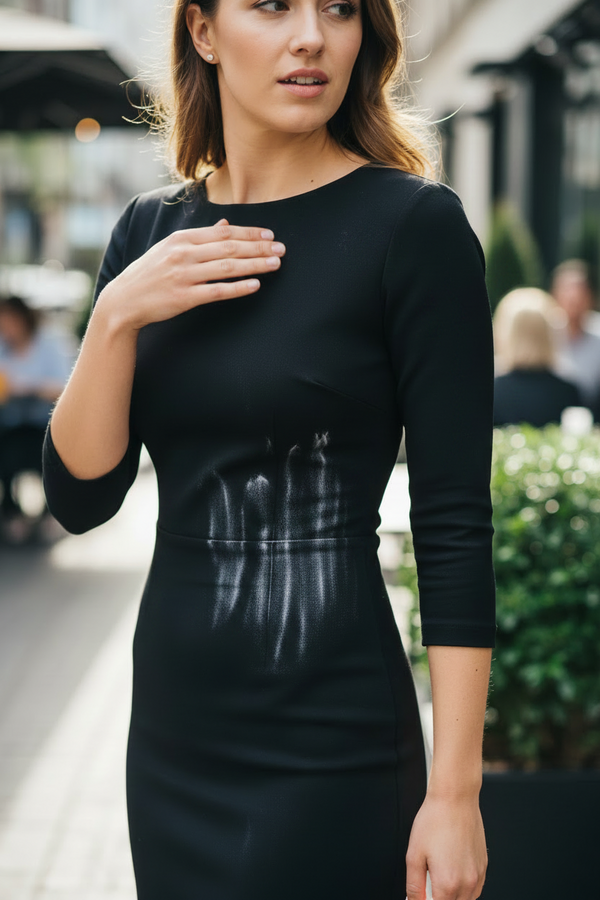
Imagine: you switch to an aluminum-free product because you prefer to use "natural" products, but your actual problem is visible sweat stains and a wet feeling, not odor. In that case, an aluminum-free product will not solve the problem you actually want to get rid of.
What's more: some people actually experience *more* visible sweating after switching, simply because the sweat-inhibiting effect of their previous product is gone. This is sometimes confused with a "detox phase" or "getting used to it," but that is a misconception: there is no physiological process by which your body "adapts" to less sweating without an active antiperspirant substance. More on this in [Switching to aluminum-free: does the "detox phase" really exist?].
When is aluminum-free the right choice?
There are good, valid reasons to choose an aluminum-free product:
If your main problem is odor, and not moisture or visible stains, then a deodorant does exactly what you need.
One wipe. Up to five days dry.
Discrete anti-perspirant wipes, individually wrapped in a plastic-free sachet. Apply in the evening, ready for the next day.

If you have sensitive skin that reacts poorly to aluminum formulas, an aluminum-free alternative might feel more comfortable, although this varies from person to person.
If you consciously choose a product without aluminum, for personal reasons unrelated to proven health risks (see [Deodorant and breast cancer: what does science *really* say?] for the facts on that), that is a valid preference you are free to make.
What if you *do* want to sweat less?
If wet armpits, visible clothing stains, or a general feeling of "never truly being dry" is your actual concern, then an antiperspirant with an effective aluminum formula is the appropriate choice, not a deodorant, no matter how natural or attractively packaged.
Within the European Union, the amount of aluminum in non-spray products is legally limited to 6.25%, a level deemed safe by the European Scientific Committee on Consumer Safety. This is the strongest protection allowed under EU regulations, and it works: it genuinely reduces sweat production in the treated area, instead of just masking the odor.
The Zero·One anti-sweat wipes contain such a formula, supplemented with vitamin E, without parabens or sulfates. You apply the wipe in the evening to clean, dry skin, and the protection lasts for up to five days.
How to consciously choose between the two?
The simplest question to ask yourself: is my problem primarily odor, or primarily moisture? If the answer is odor, a deodorant, with or without aluminum, is probably sufficient. If the answer is moisture, wet patches, a clammy feeling, visible stains on clothes, then you need an antiperspirant, and aluminum-free is simply not the right product category for that purpose.
Frequently asked questions
Is aluminum-free deodorant worse than an antiperspirant? Not worse, but different in purpose. A deodorant combats odor, an antiperspirant reduces sweat. Which is better depends on what your actual problem is.
Can I gradually get used to less sweating with an aluminum-free product? No, there is no physiological process by which your body "learns" to sweat less without an active antiperspirant substance. Your sweat production remains at the level consistent with your own physiology.
Why do some people still feel better with aluminum-free? This often has to do with a personal preference for the ingredient list, sensitive skin, or the feeling that "natural" is better, regardless of its actual effectiveness against sweat.
Is there an intermediate solution between aluminum-free and a strong antiperspirant? Formulas differ in concentration and active ingredient, but within the EU, 6.25% aluminum in non-spray products is the maximum, legally permitted, and deemed safe concentration. There is no "partially effective" intermediate form without aluminum that still reduces sweat.
Should I combine aluminum-free deodorant with an antiperspirant? You can, but it's often not necessary: an effective antiperspirant also reduces the bacterial growth that causes odor, simply because there is less sweat to break down.

Stay dry. And in the loop.
Practical tips on sweat and skin, plus an occasional offer. No spam, you can unsubscribe at any time.